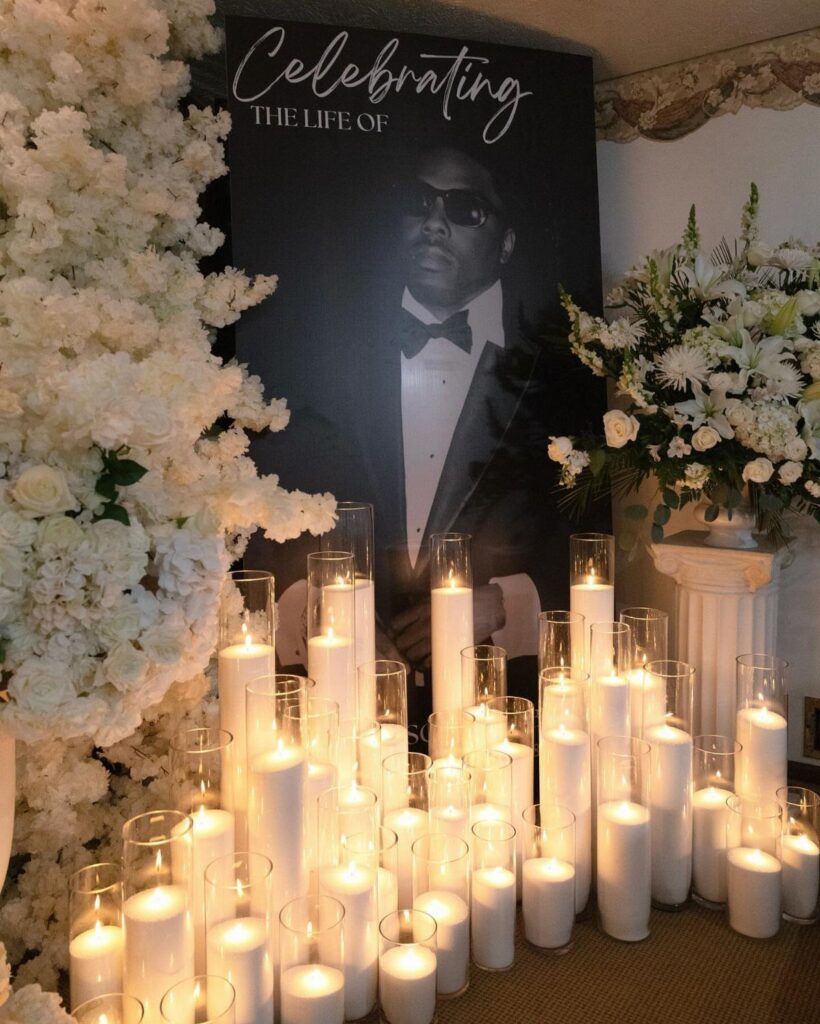
Your starting material decides the idea: a stack of photos points to the Life Timeline Photo Display or the Memory Boards, a loved one’s belongings suit the Memory Table, and a few bunches of flowers can become the Flower Lettering Sign.
If the person left behind objects like straw hats and vintage suitcases, build the display from those.
1. Life Timeline Photo Display
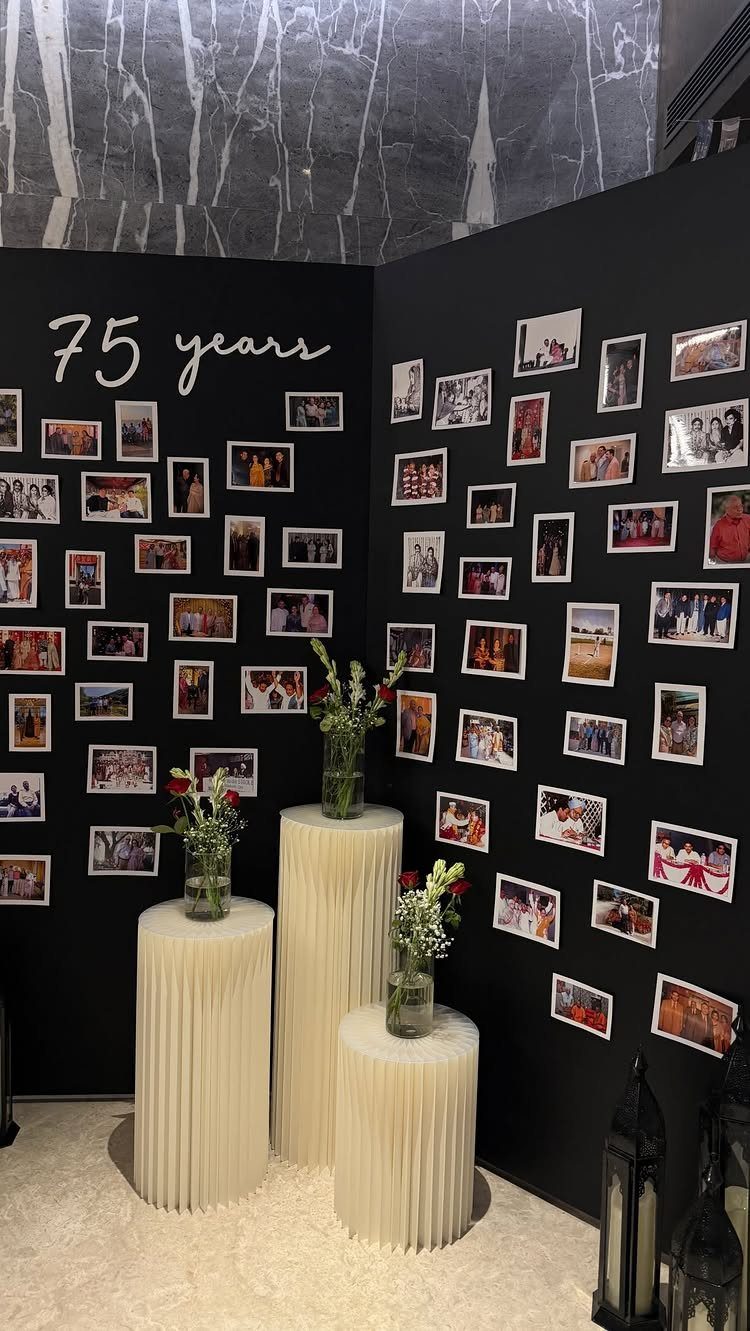
A single number can organize a whole wall. On a black backdrop, small photos arranged around "75 years" read as a life laid out in order, and the dark surface keeps the faces from competing with each other.
Print the photos small and keep them in chronological order, from the earliest decade to the most recent.
Red flowers at the base fill the gap between wall and floor and give the display a finished base. Order the prints by decade before you hang anything, since rearranging is the slow part.
2. Celebration of Life Memory Tree
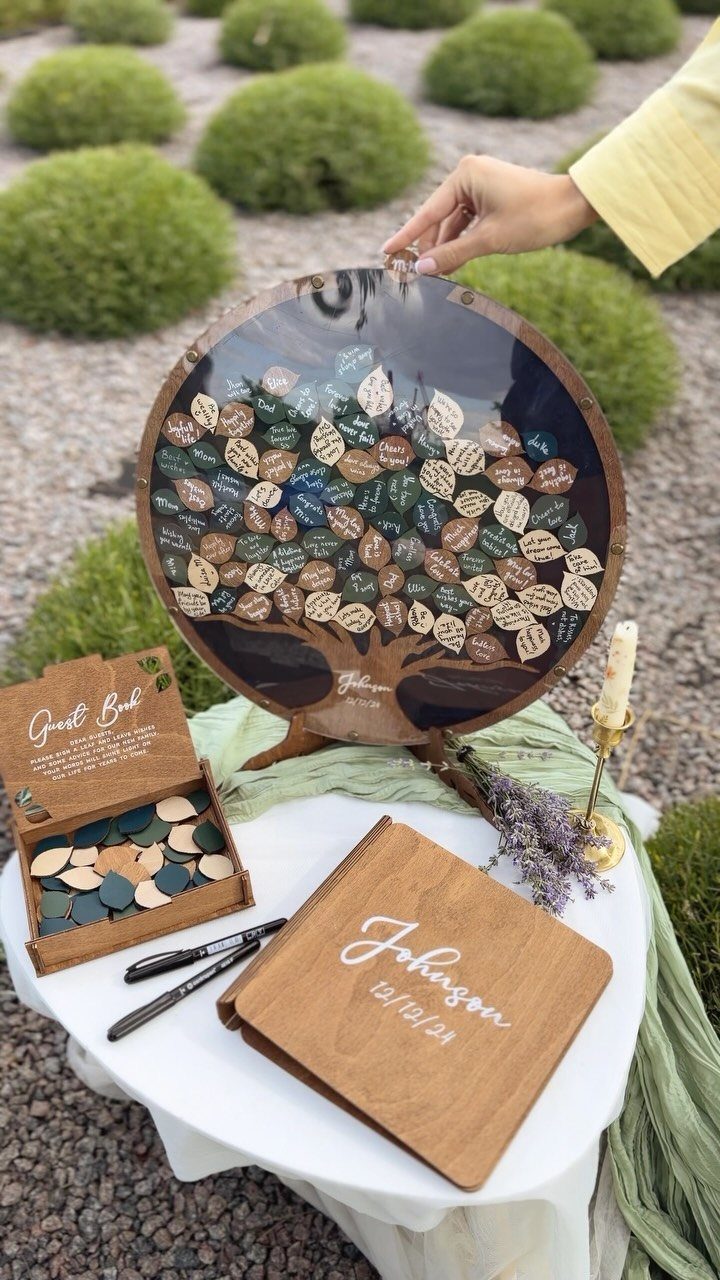
Leaf-shaped cards let guests write a line and hang it from branches. Guests write on a leaf, and the tokens fill a round wooden frame, so the finished piece can hang at home afterward.
Put a pen beside the tokens and a short sign explaining what to write. A name and one memory per leaf is plenty.
3. Memory Jars
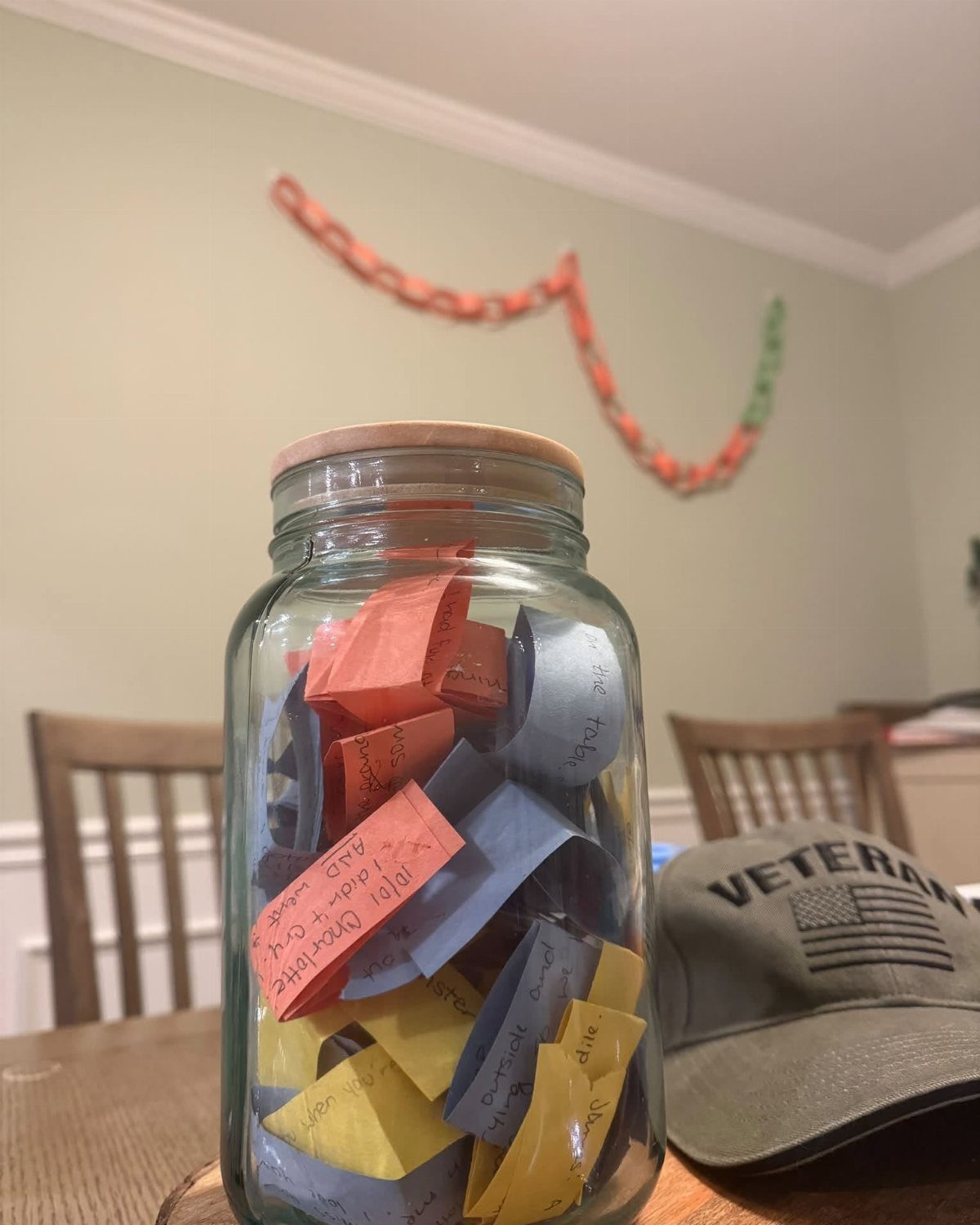
Notes in a glass jar need almost no styling, and that is the appeal. Colorful slips look warm through the glass, and a wooden lid keeps the jar tidy once guests stop writing.
Set the jar on a side table with slips and pens, and place a personal object beside it to ground the display.
Cut the slips yourself from colored paper. Mixed colors cost almost nothing and fill the jar faster.
4. Candle Displays
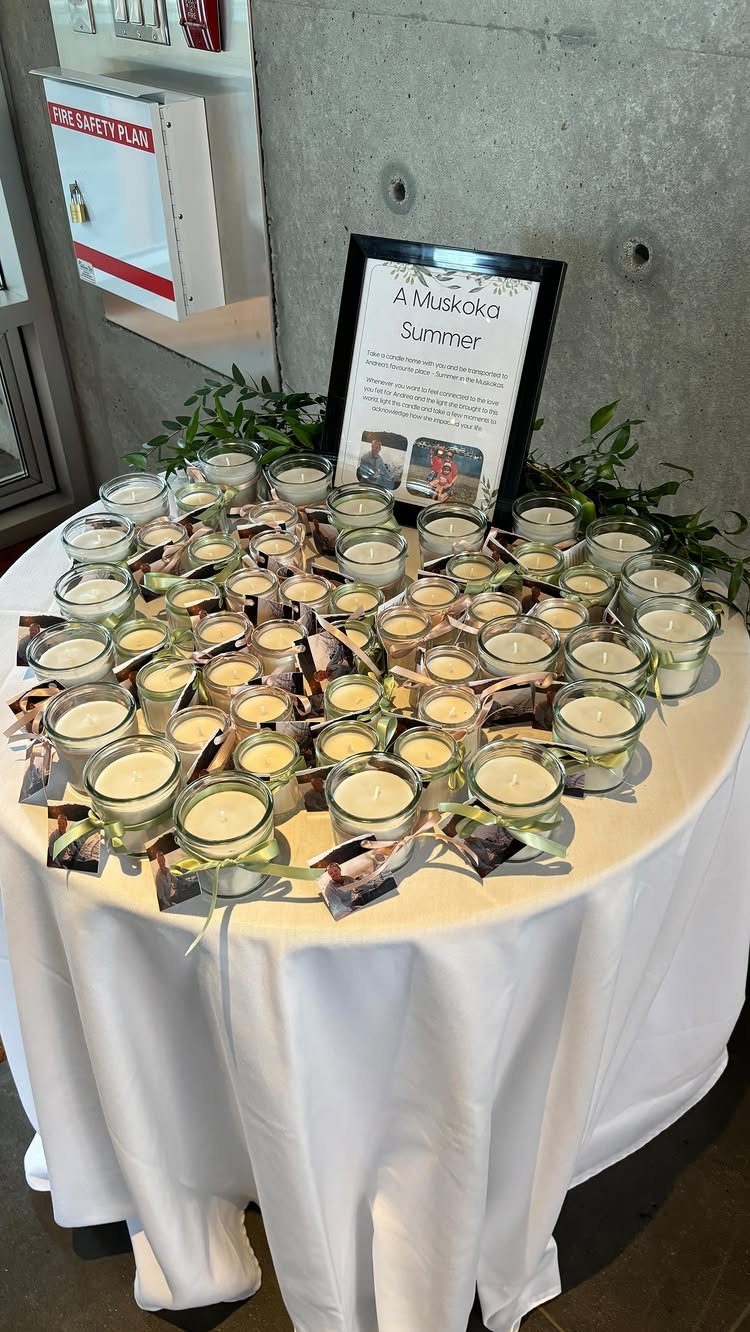
Candles with photos tied on do 2 jobs at once: light and portraits.
Use votives so the flame stays enclosed, with the table clear of loose paper.
Tape or tie photos on the outside of the glass, away from the flame. Battery votives work for rooms where open flame is not allowed.
5. Memory Table
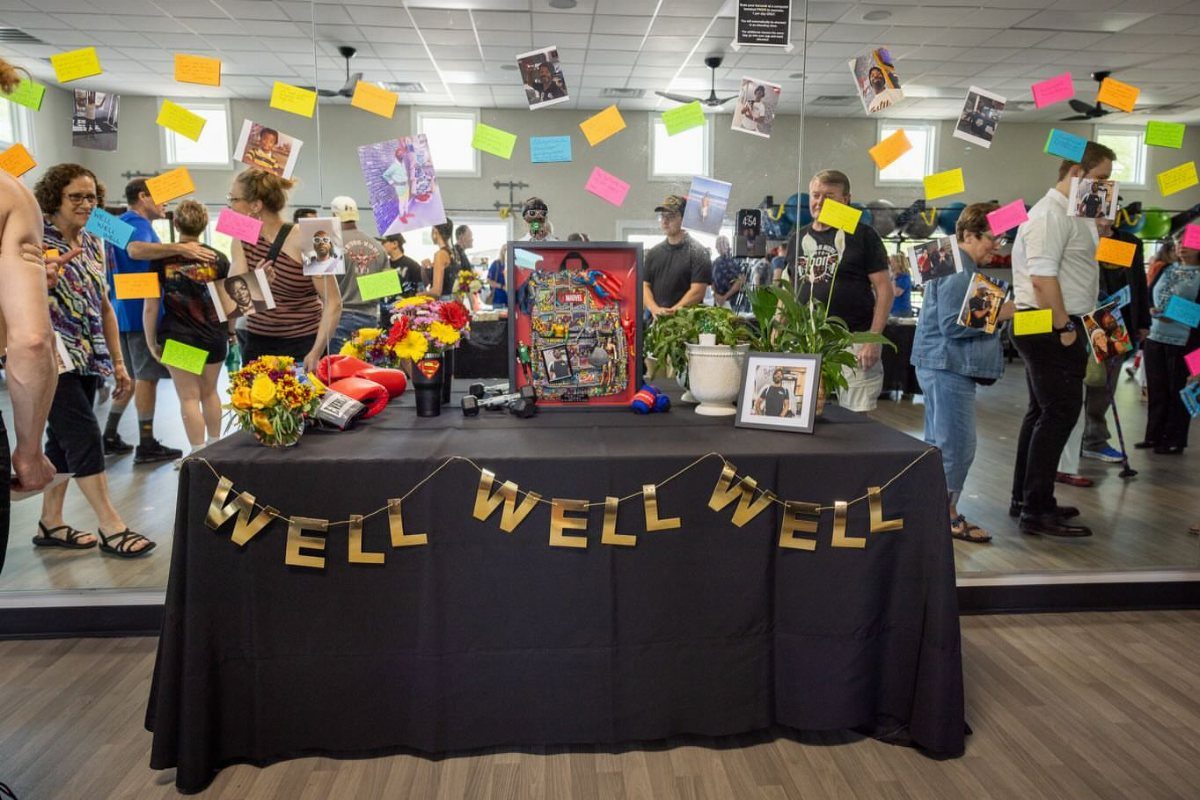
A memory table works best when it looks like a gathering place and not a shrine.
Hang a few photos above the table so the eye travels up, and leave open space for guests to set down their own items. Choose a spot guests pass naturally, so people can linger there in small groups.
6. Memory Boards
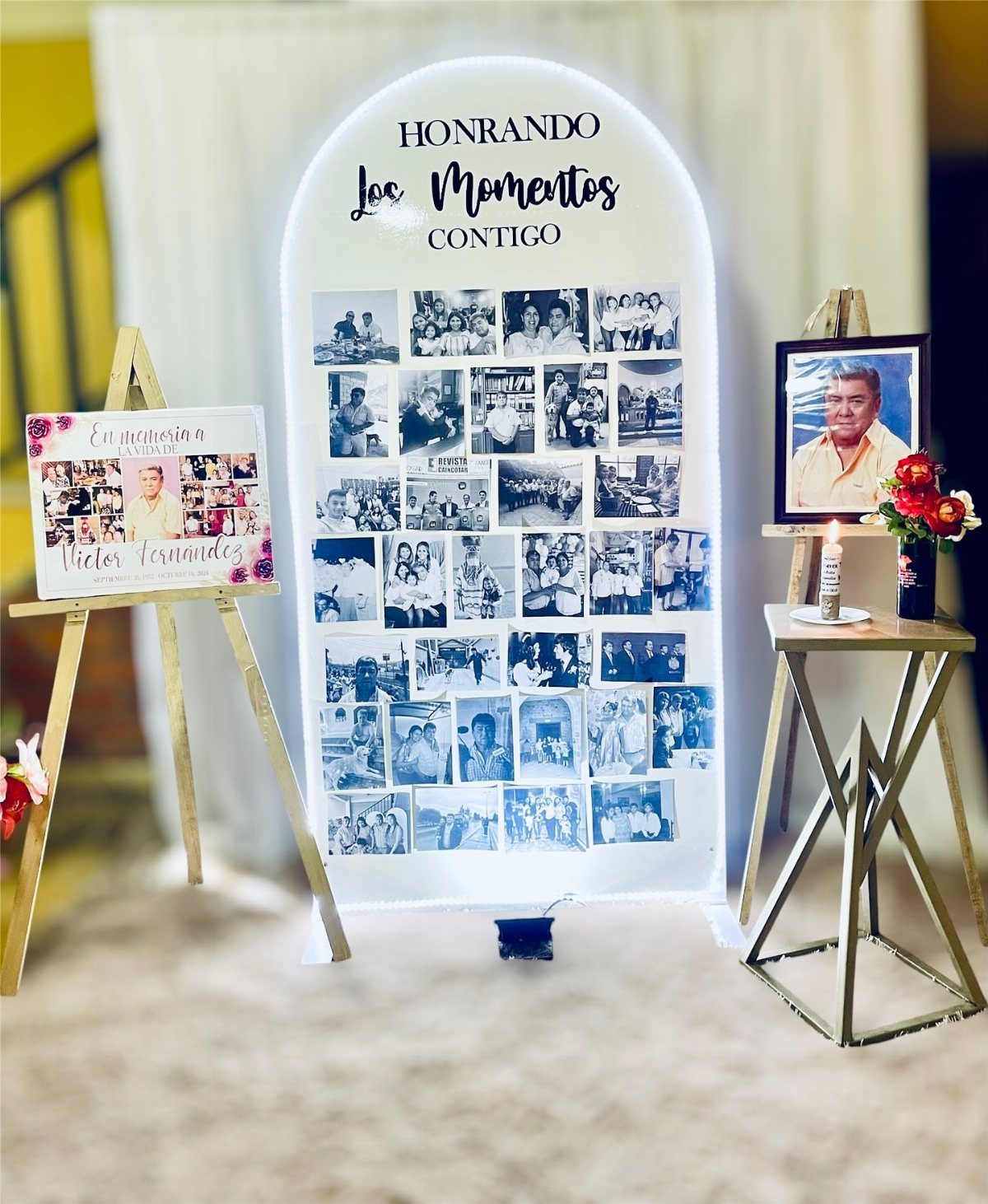
An arched memory board looks like a scrapbook page enlarged for a room. A title across the top, many photos below, and a framed portrait beside it let guests read a life at a glance.
Give the board a title in the family’s own words or language.
Then pair it with a smaller board on a second easel for overflow photos. Print more photos than you think you need; a full board looks better than a sparse one.
7. Seating Areas
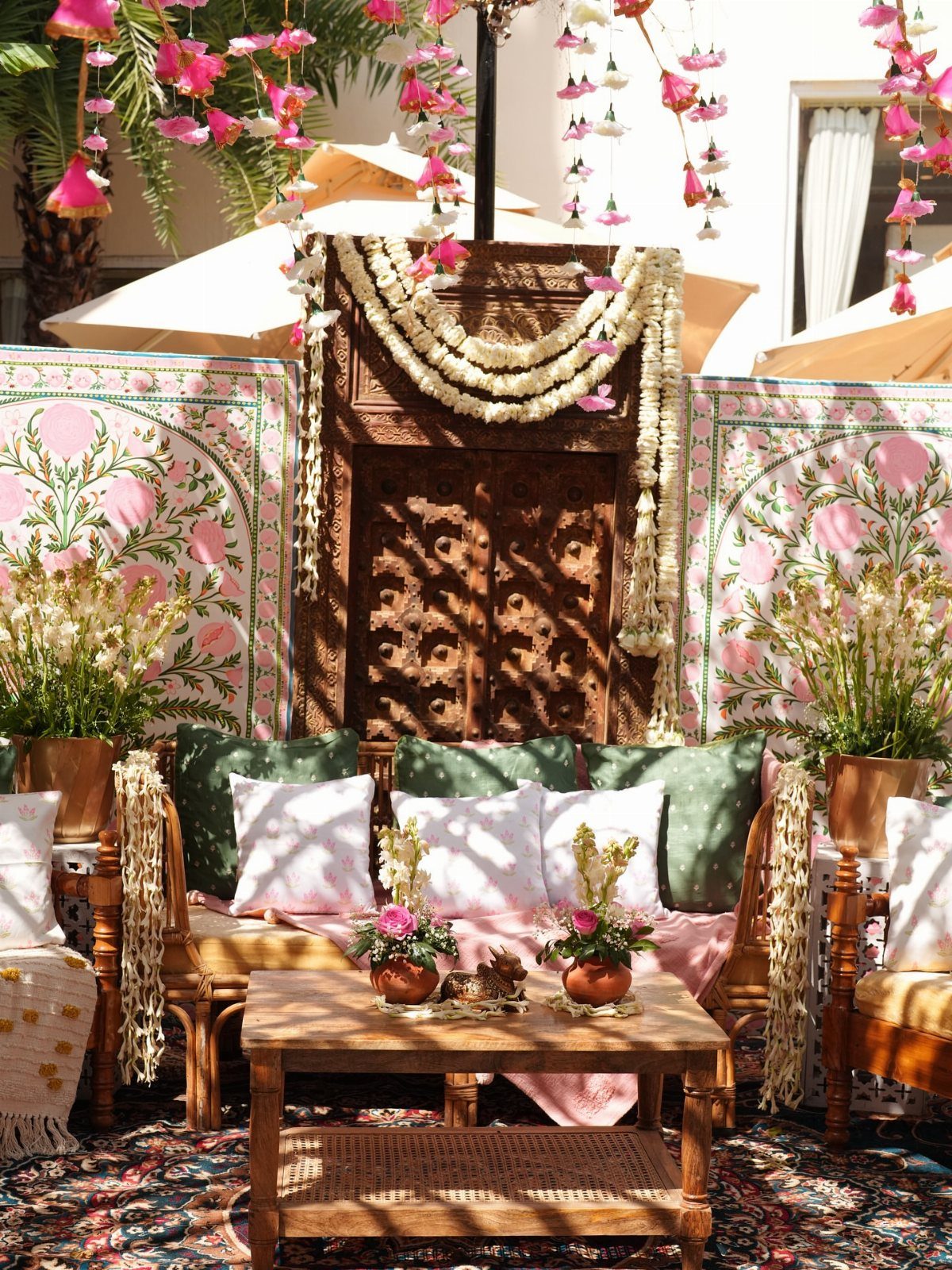
Low furniture and soft pillows tell guests they are allowed to sit down and stay.
Set the seats in a loose circle so people can talk in small groups. Hang flower garlands behind them to give the corner a backdrop without buying extra decor.
Pillows you already own do the same job as new ones.
8. Floral Memorial Backdrop Wall
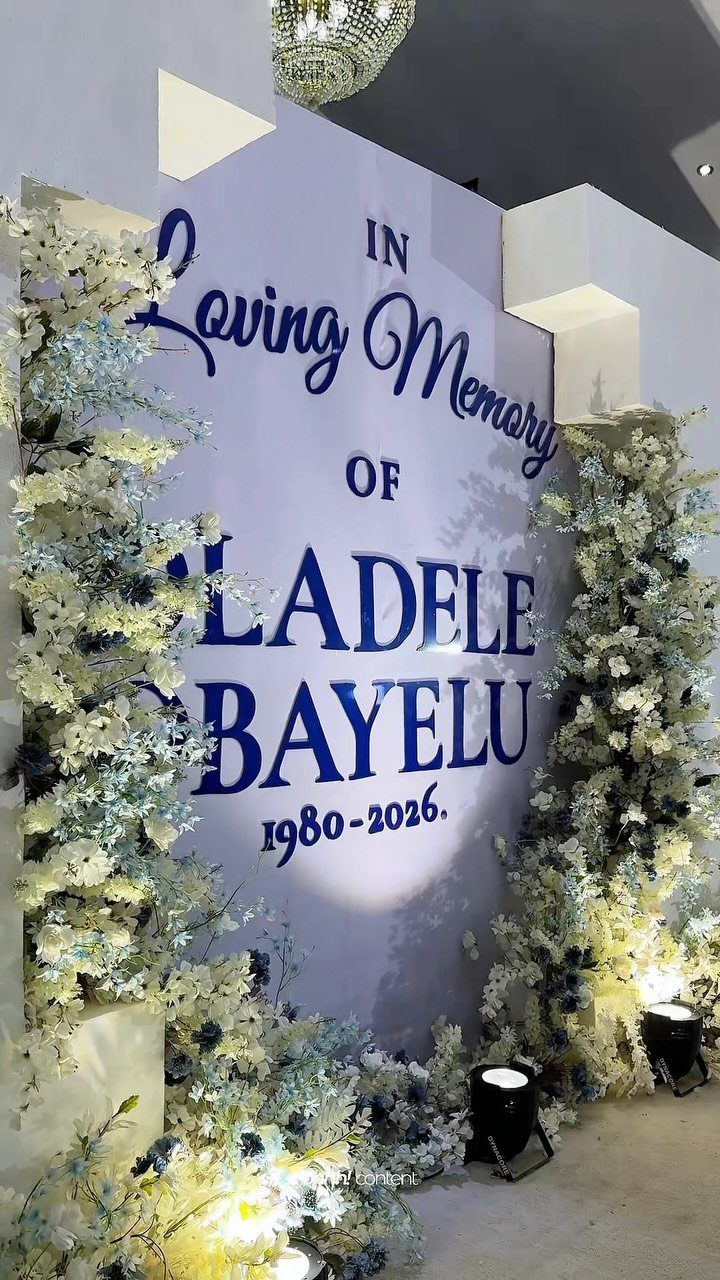
A white wall with the name and dates in blue lettering gives guests one clear place to stand for photos.
Matching white and blue flowers along the base keep the palette calm, and spotlights on the floor light the text from below.
Pick lettering colors from the flowers you can find, so the two match. Keep the wording short: "In Loving Memory Of," the name, and the years.
Floor lights are the cheapest way to make a plain wall look planned.
9. Backlit Cross Memorial Display
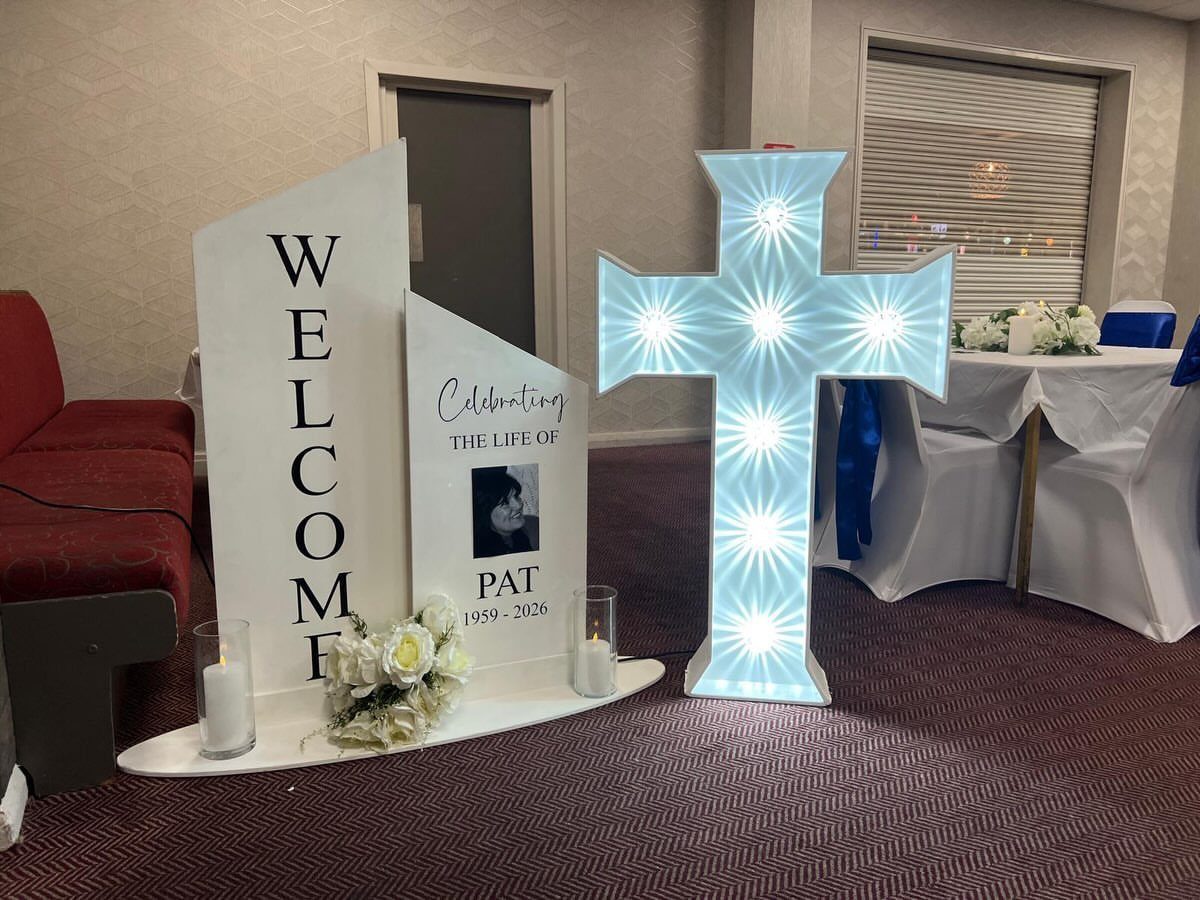
A glowing white cross turns a corner of a carpeted room into a focal point, and it reads as quiet rather than loud. A "Welcome" sign and a "Celebrating the Life Of" sign set the tone as guests walk in.
Battery candles are my pick for rooms with carpet. Tell guests the name and years on the sign so no one has to ask.
Choose this one if the faith tradition fits the person.
10. Arched Memorial Board
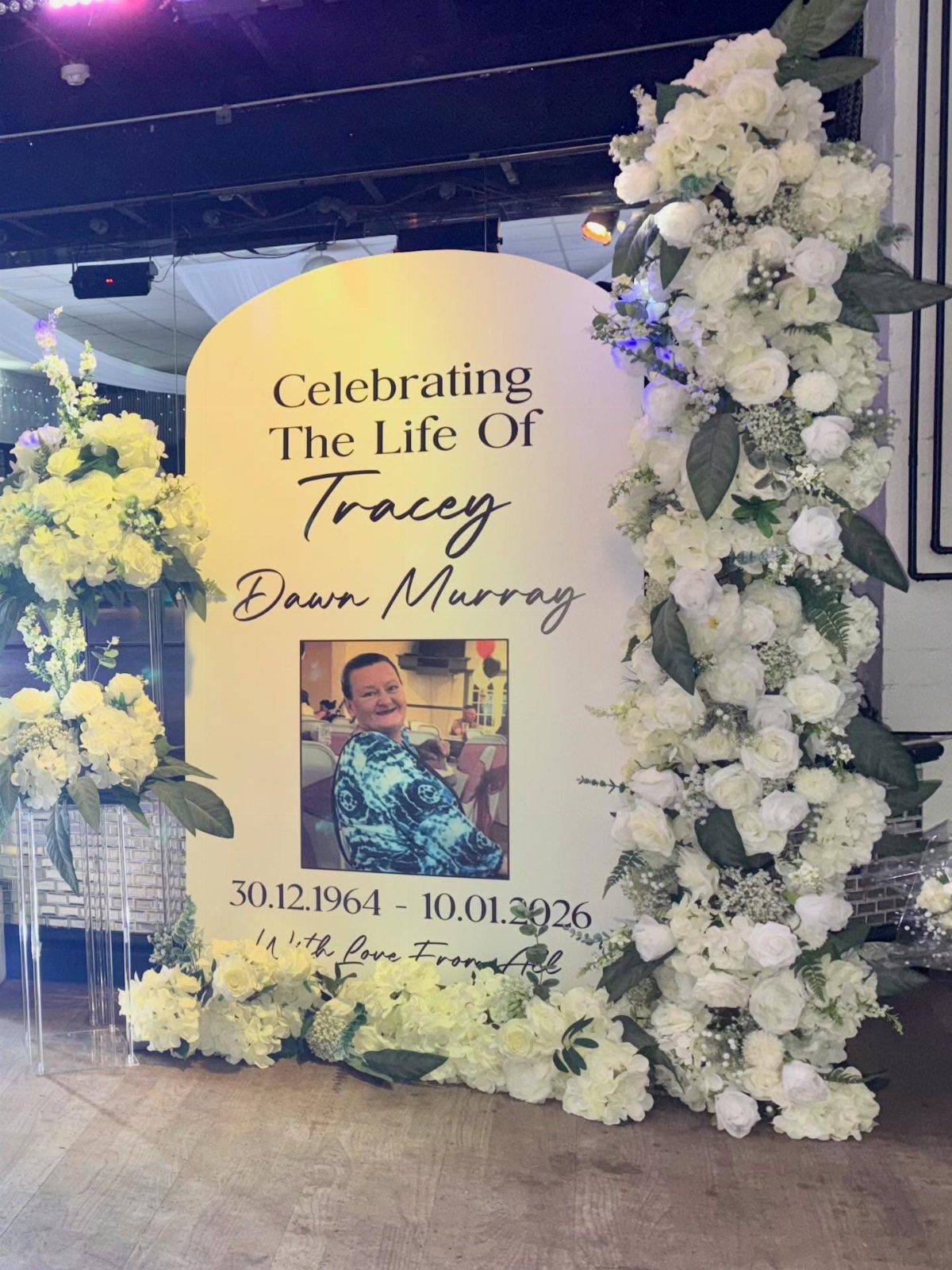
An arched sign with one portrait, the full name and the dates says everything a guest needs to know, and it needs no explanation. White and yellow flowers around the edge soften the shape and bring in warmth.
Choose a portrait where the person looks like themselves, and print it large.
Group flowers in clusters at the base and along one side rather than ringing the whole arch. A single strong photo beats a crowded collage here.
11. Personal Hobby Memorial Backdrop

Straw hats, vintage suitcases and potted grass say "traveler" faster than any paragraph could. A patterned backdrop holds the hats, and the suitcases stand in front as a base.
Use what the person actually owned, so the display holds their story. A black sign with a short invitation, like taking a keepsake at a set time, lets guests join in rather than just look.
If the hobby is fishing, gardening or music, swap in those objects. Borrowed props from friends cost nothing.
12. Flower Lettering Sign
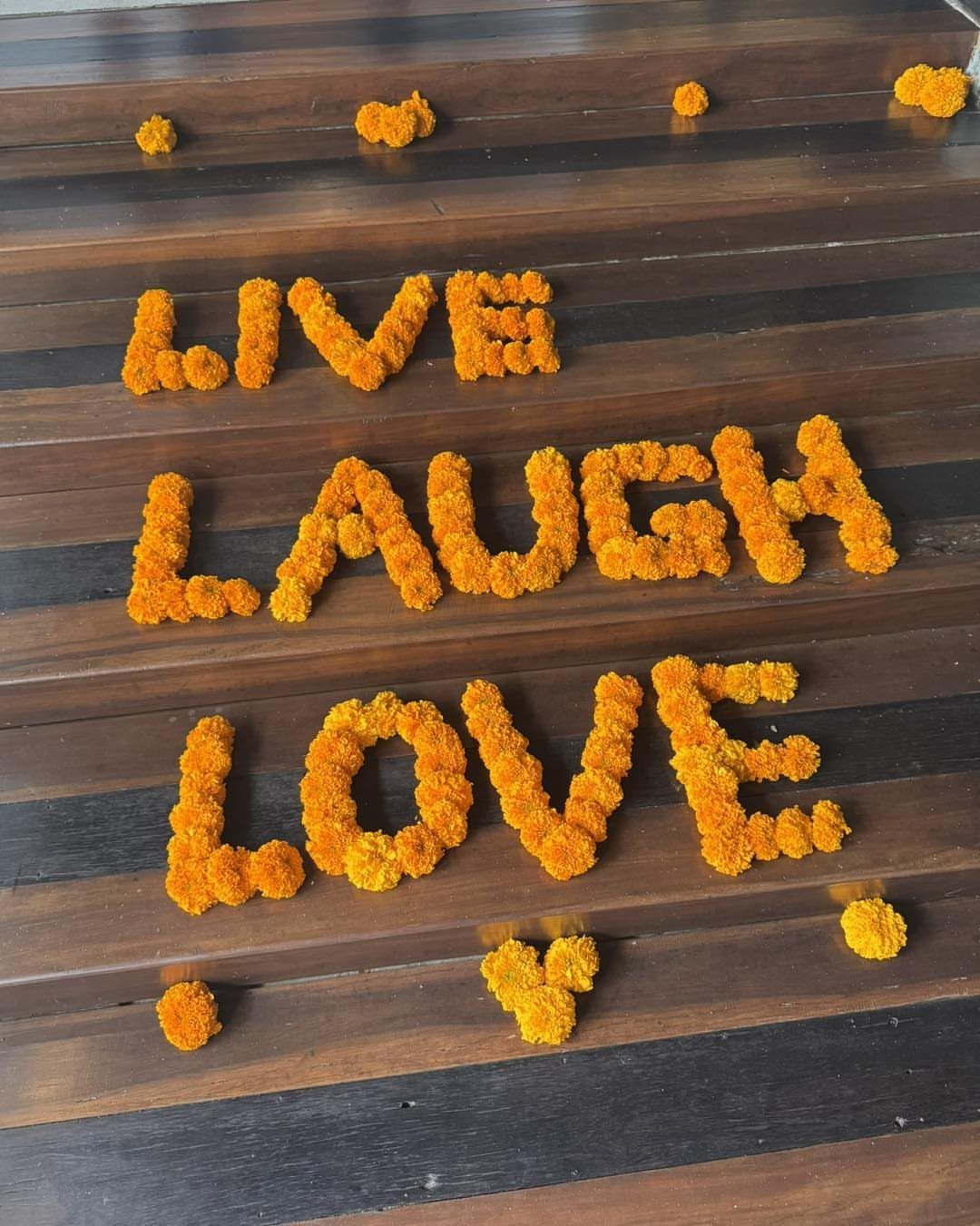
Fresh orange blossoms laid out as letters on dark wood give a sign real warmth for the price of a few bunches of flowers. Dark brown makes the orange glow, so the words read from across a room.
Sketch the letters lightly in chalk first, then fill them in with the blooms. Do it the morning of the gathering so the petals stay fresh.
I would pick a phrase the person actually said, or a single word, over a generic saying.
Choosing Decorations
Start with the person, not the decor catalog. Write down 3 or 4 traits, such as funny, outdoorsy or stubborn about good coffee, and let those decide the mood before you buy anything.
If nature was their thing, plants and flowers carry the theme without much explanation. A favorite color can run through table settings, balloons or flower arrangements, which is an easy way to make a room feel like theirs.
Words work too.
Print a favorite quote, saying, poem or scripture verse on small cards and place them around the room. Choose the colors and the wording together so the cards look like part of the plan.
Planning Considerations
Decide the tone first: reflective, joyful, casual or spiritual. Every other choice, from the room to the music, follows from it.
Then settle format and location: indoor, outdoor, a restaurant or your own home. Settle the date and time with the closest family first, since their schedules decide who can attend, and mail invitations only after the guest list is final.
If you plan a slideshow, check the microphone, speakers and projector before guests arrive.
For food, catering, a potluck or simple refreshments all work. Set out a few boxes of tissues where guests can reach them without asking; people cry from both joy and grief at these gatherings.
Creating Atmosphere
Soft, warm light does more for the mood than any single decoration. It makes a room feel comforting and gives people permission to talk quietly.
Flameless candles in the colors the person loved give a room warmth and a little of their personality, with no fire risk. For an evening gathering, line the path with lanterns, or string soft white lights around the photo displays.
A memorial candle printed with their photo gives the room a natural focal point, and it fits on a side table or a mantel. Put it where guests will see it as they come in.
Choose songs the person loved, then set the volume low enough that guests can still talk comfortably.
Frequently Asked Questions
What are some thoughtful ideas for a memorial table?
Fill it with photos, personal items and cards where guests can write memories.
Put it where guests pass naturally, in a spot that invites small groups to linger, so it reads as a gathering place and never as a shrine. Focusing on the person’s passions and cherished possessions makes it feel like theirs.
How do you honor someone at a celebration of life?
Let the person’s own quirks, passions and the joy they gave others shape the day; mourning can sit in the background.
Easy ways in: a photo timeline, a memory tree or jar where guests write a line, their favorite songs played softly, and a hobby display using objects they actually owned.
Quotes, poems or scripture verses they loved, printed on small cards, add meaning around the room.
What is a celebration of life?
People come together to remember someone through the stories and laughter they shared with that person.
A traditional funeral follows a set script of mourning, while this kind of gathering is built around who the person was and what they loved, which makes the mood lighter and more reflective.
Format is open, from a loose open house to a program with speakers, and since no fixed date is required, families can choose a day when the people who matter can attend.